First off algal bloom is a rapid increase or accumulation in the population of microscopic algae the ocean. They are in both fresh water and marine environment, and they are blooming at concentrations of hundreds to thousands of cells per milliliter, depending on the severity. In most cases these algaes are not harmful unless the case is HAB, Harmful Algal Bloom. HAB are algal bloom events involving toxic or otherwise harmful phytoplankton such as dinoflagellates of the genus Alexandrium and Karenia, or diatoms of the genus Pseudo-nitzschia. They occur in many regions of the world, and in the United States are recurring phenomena in multiple geographical regions. HAB is a very serious problem in the earths ocean, the harmful effects include...
- the production of neurotoxins which cause mass mortalities in fish, seabirds, sea turtles, and marine mammals
- human illness or death via consumption of seafood contaminated by toxic algae
- mechanical damage to other organisms, such as disruption of epithelial gill tissues in fish, resulting in asphyxiation
- oxygen depletion of the water column (hypoxia or anoxia) from cellular respiration and bacterial degradation

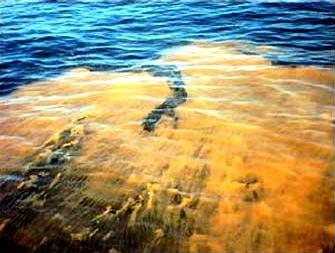
We can stop HAB by stopping pollution in the ocean, one cause of HAB is nutrient enrichment in the water. The Gulf of Maine frequently experiences blooms by an organism that produces a neurotoxin saxitoxin,which for paralytic shellfish poisoning. Also the "Florida red tide" that occurs in the Gulf of Mexico is a HAB caused by Karenia brevis, another dinoflagellate which produces brevetoxin, the neurotoxin responsible for neurotoxic shellfish poisoning.


No comments:
Post a Comment